Burnout & Slowing Down
June is often associated with the beginning of summer. The days are longer, the weather is better, school is ending, vacations are being planned, and there is this unspoken expectation that we should feel energized, refreshed, and ready to enjoy life.
But for many people, that is not the reality.
Instead, June often arrives after months of pushing through responsibilities, managing stress, caring for others, meeting deadlines, juggling family obligations, and trying to keep all the moving pieces together. By the time summer arrives, many people aren’t feeling refreshed - they’re exhausted.
Burnout doesn’t always look like a dramatic collapse. Sometimes it looks like feeling disconnected from things you normally enjoy. Sometimes it looks like irritability, brain fog, chronic fatigue, or feeling overwhelmed by tasks that once felt manageable. Sometimes it simply feels like you’re running on fumes.
What happens when you’ve been operating in “go mode” for too long? What does it mean to intentionally slow down?
As you go through, I hope that you begin to challenge the belief that our worth is tied to our productivity. That you become more currious about what your mind and body have been trying to tell you. And give yourself permission to slow down before you’re forced to.
Because slowing down is NOT giving up. Sometimes slowing down is exactly what allows us to keep going!
-
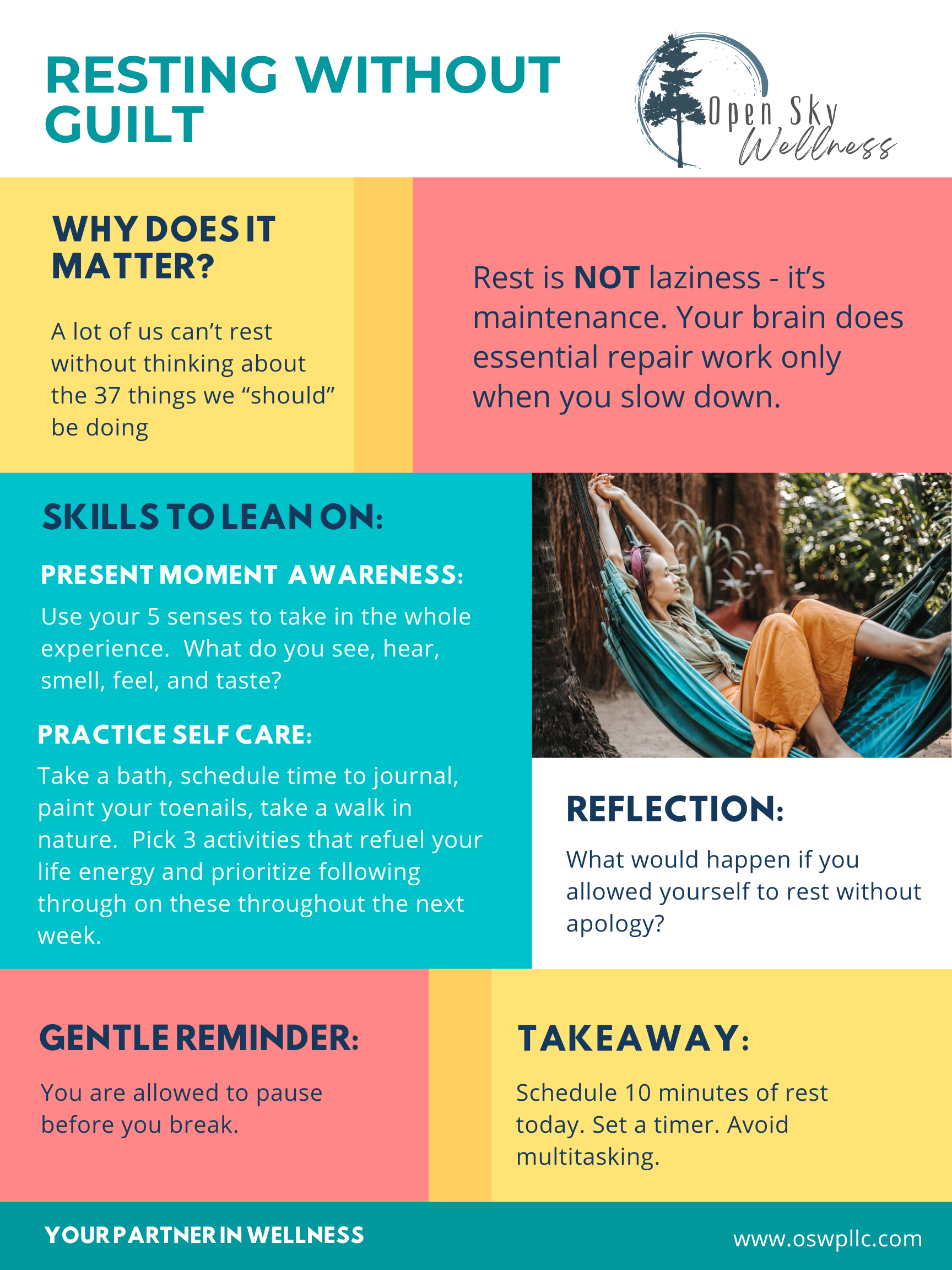
Rest is NOT laziness - it’s maintenance. Your brain does essential repair work only when you slow down.
Why does it matter?
A lot of us can’t rest without thinking about the 37 things we “should” be doing
Present Moment Awareness
Use your 5 senses to take in the whole experience. What do you see, hear, smell, feel, and taste?
Practice Self-Care
Take a bath, schedule time to journal, paint your toenails, or take a walk in nature. Pick 3 activities that refuel your life energy and prioritize following through on these throughout the next week.
You are allowed to pause before you break.
Reflection: What would happen if you allowed yourself to rest without apology?
-
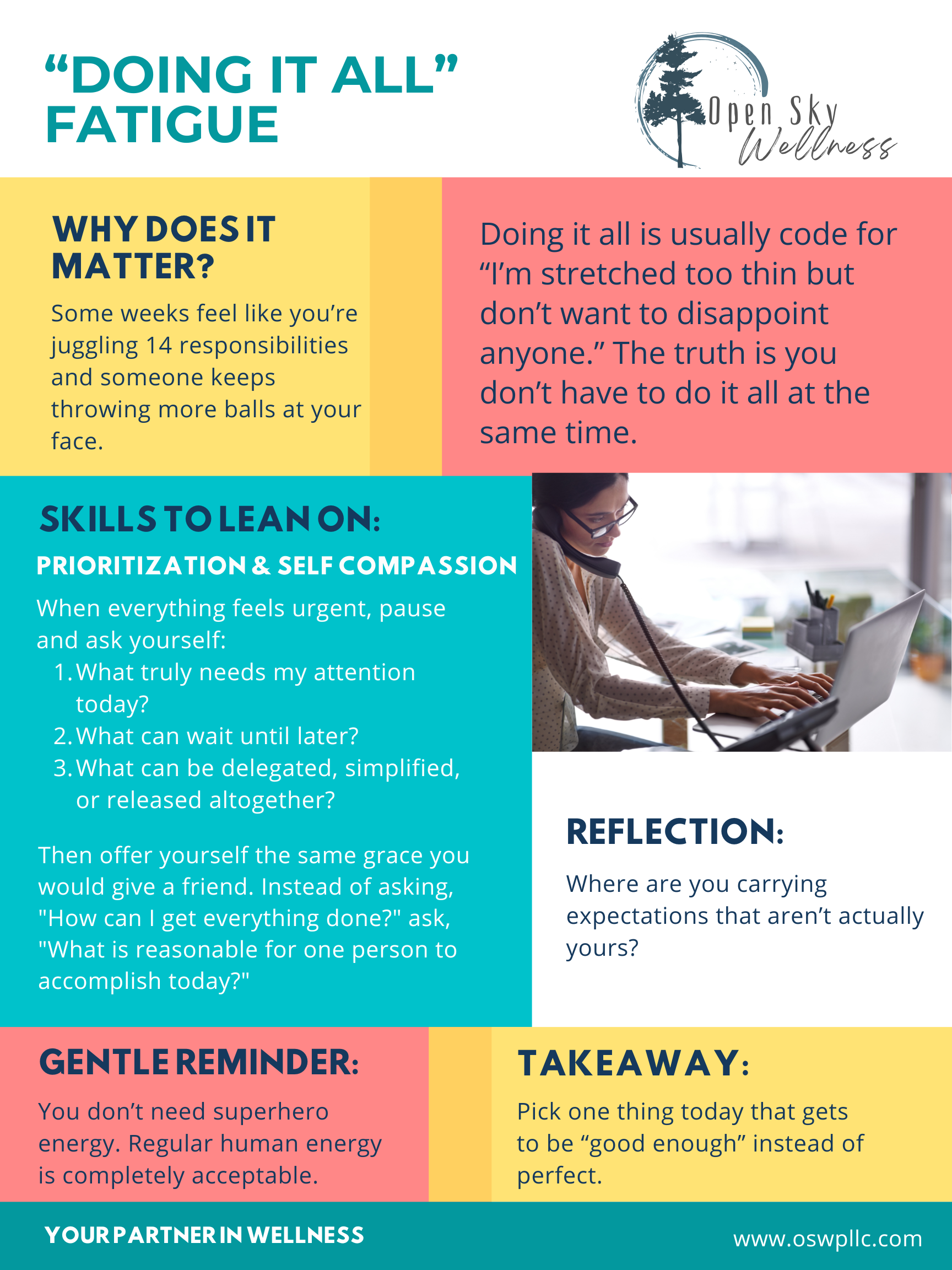
Doing it all is usually code for “I’m stretched too thin but don’t want to disappoint anyone.” The truth is, you don’t have to do it all at the same time.
Why does it matter?
Some weeks feel like you’re juggling 14 responsibilities and someone keeps throwing more balls at your face.
Prioritization & Self-Compassion
When everything feels urgent, pause and ask yourself:
What truly needs my attention today?
What can wait until later?
What can be delegated, simplified, or released altogether?
Then offer yourself the same grace you would give a friend. Instead of asking, "How can I get everything done?" ask, "What is reasonable for one person to accomplish today?"
You don’t need superhero energy. Regular human energy is completely acceptable.
Reflection: Where are you carrying expectations that aren’t actually yours?
-
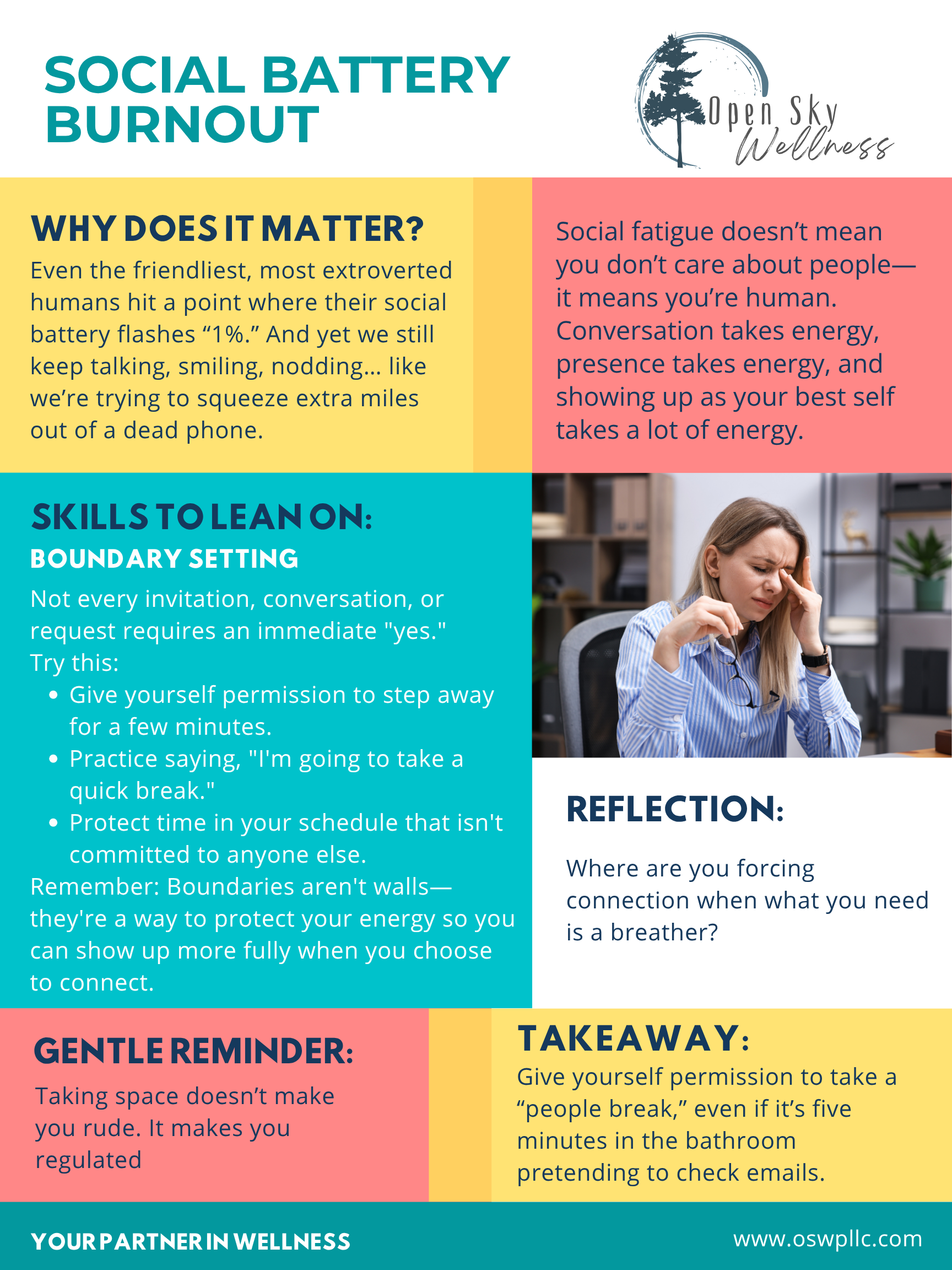
Social fatigue doesn’t mean you don’t care about people—it means you’re human. Conversation takes energy, presence takes energy, and showing up as your best self takes a lot of energy.
Why does it matter?
Even the friendliest, most extroverted humans hit a point where their social battery flashes “1%.” And yet we still keep talking, smiling, nodding… like we’re trying to squeeze extra miles out of a dead phone.
Boundary Setting
Not every invitation, conversation, or request requires an immediate "yes."
Try this:
Give yourself permission to step away for a few minutes.
Practice saying, "I'm going to take a quick break."
Protect time in your schedule that isn't committed to anyone else.
Remember: Boundaries aren't walls—they're a way to protect your energy so you can show up more fully when you choose to connect.
Taking up space doesn’t make you rude. It makes you regulated.
Reflection: Where are you forcing connection when what you need is a breather?
-
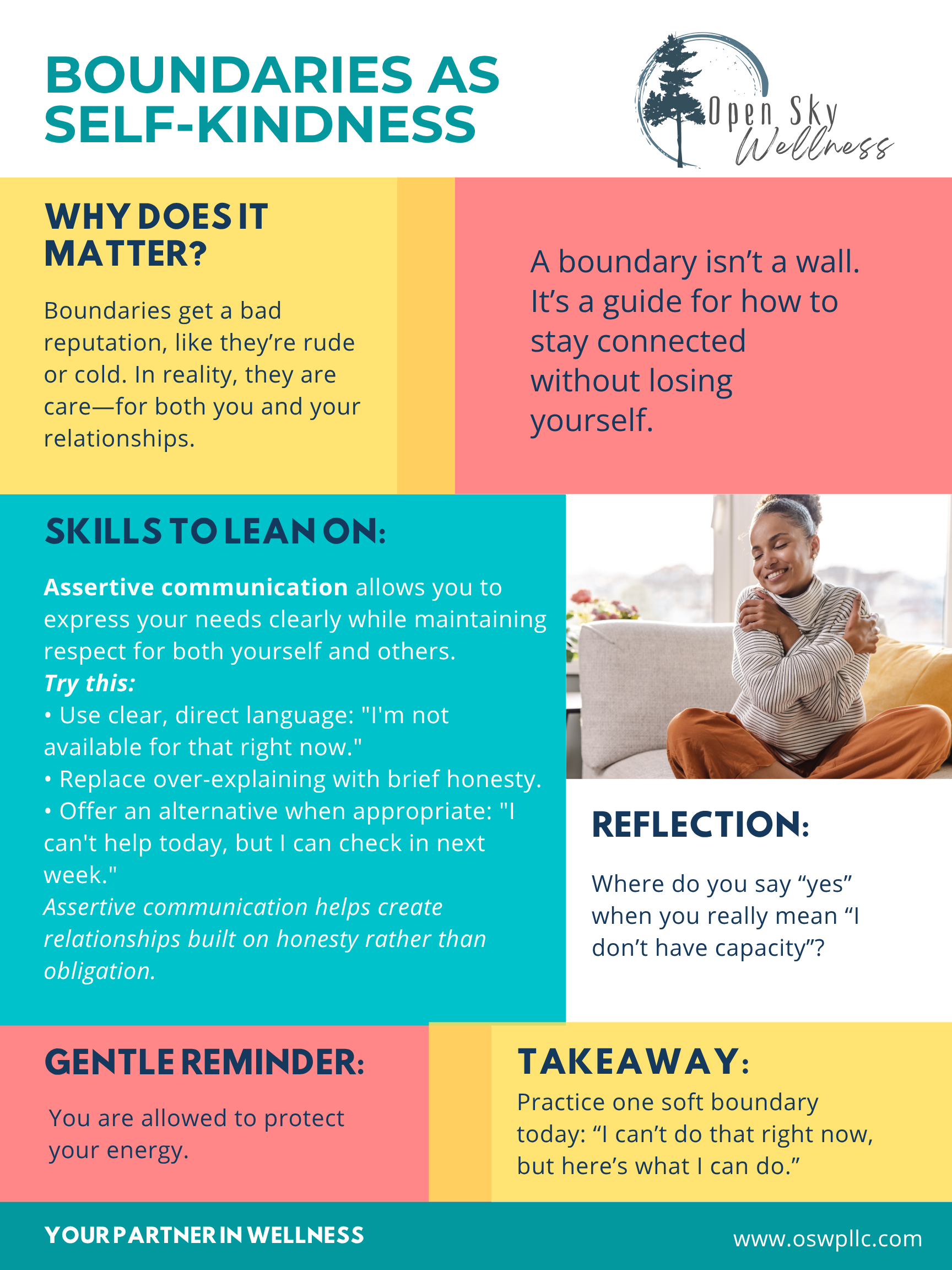
A boundary is not a wall. It is a guide for how to stay connected without losing yourself.
Why does it matter?
Boundaries get a bad reputation, like they’re rude or cold. In reality they are care - for both you and your relationships.
Skills to Lean On:
Assertive communication allows you to express your needs clearly while maintaining respect for both yourself and others.
Try this:
Use clear, direct language: “I’m not available for that right now.”
Replace overexplaining with brief honesty.
Offer an alternative when appropriate: “I can’t help today, but I can check in next week.”
Assertive communication helps create relationships based on honesty rather than obligation.
You are allowed to protect your energy.
Reflection: Where do you say “yes” when you really mean “I don’t have capacity”?