The Eight Pillars of Holistic Health: A Whole-Person Approach to Well-Being
Holistic health focuses on caring for the whole person rather than addressing one area of well-being at a time. Our health is shaped by many interconnected dimensions, each influencing how we feel, function, and heal in daily life.
This approach is grounded in the eight pillars of holistic health: physical, nutritional, emotional, social, spiritual, intellectual, occupational, and environmental well-being. Each pillar supports the others, working together to create balance and resilience. When one area is out of alignment, it can affect the rest—sometimes in subtle ways, such as low energy or difficulty concentrating, and other times more noticeably through stress, illness, or burnout. Likewise, nurturing one pillar often strengthens several others at the same time.
-
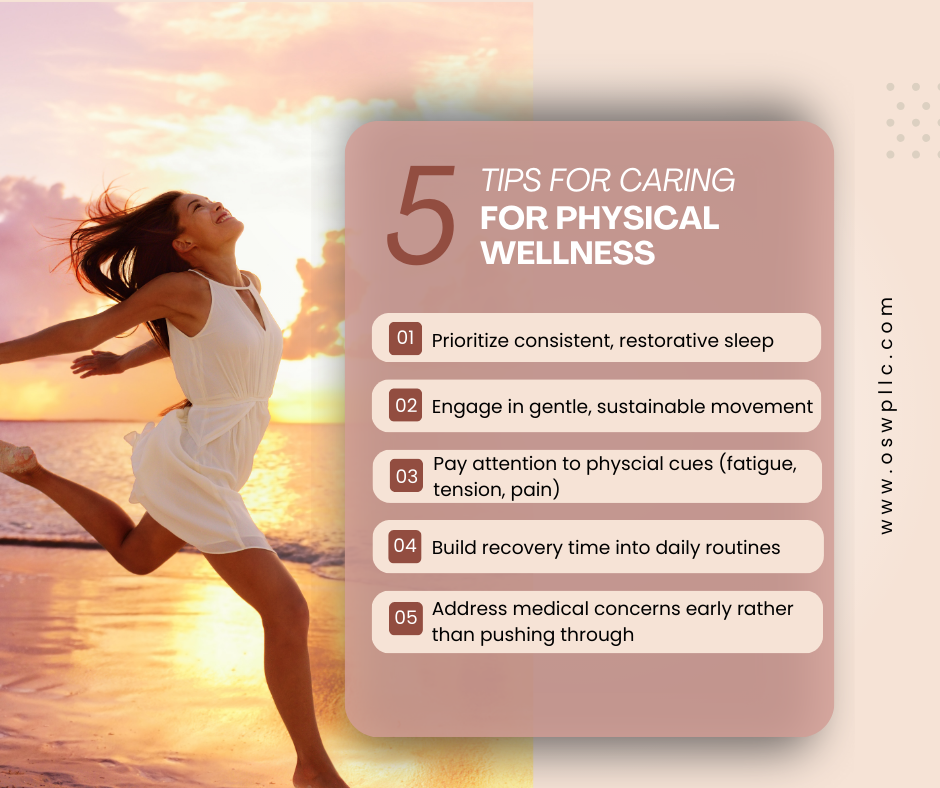
Physical wellness focuses on how the body functions and how we care for it through movement, rest, and attention to physical cues. It directly impacts energy levels, emotional regulation, and stress tolerance. When physical needs are unmet—such as chronic fatigue, pain, or poor sleep—mental health symptoms often intensify. Whole-person care recognizes the body as an essential part of emotional and psychological well-being.
Tips & Tricks:
Prioritize consistent, restorative sleep
Engage in gentle, sustainable movement
Pay attention to physical cues (fatigue, tension, pain)
Build recovery time into daily routines
Address medical concerns early rather than pushing through
-
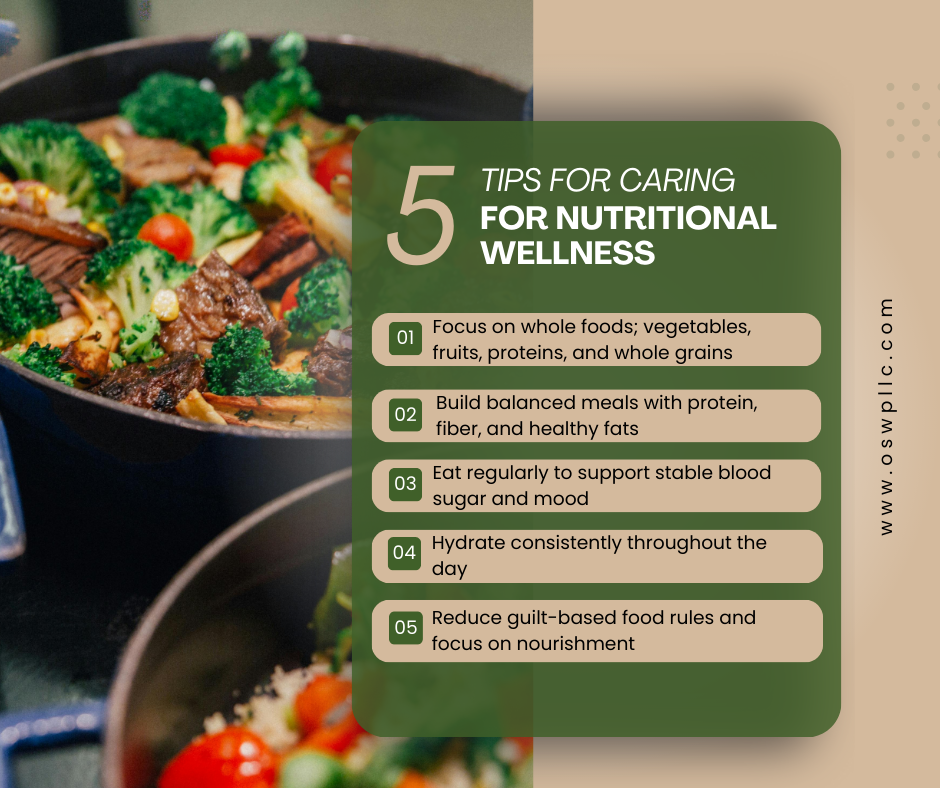
Nutritional wellness centers on nourishing the body and brain with foods that support physical and mental health. A whole-food approach—emphasizing minimally processed foods—can promote stable energy, improved concentration, and emotional balance. Nutrition is not about perfection or restriction; it is about consistency, nourishment, and sustainability.
Tips & Tricks:
Focus on Whole Foods: vegetables, fruits, proteins, and whole grains.
Build balanced meals with protein, fiber, and healthy fats.
Eat regularly to support stable blood sugar and mood.
Hydrate consistently throughout the day.
Reduce guilt-based food rules and focus on nourishment
-
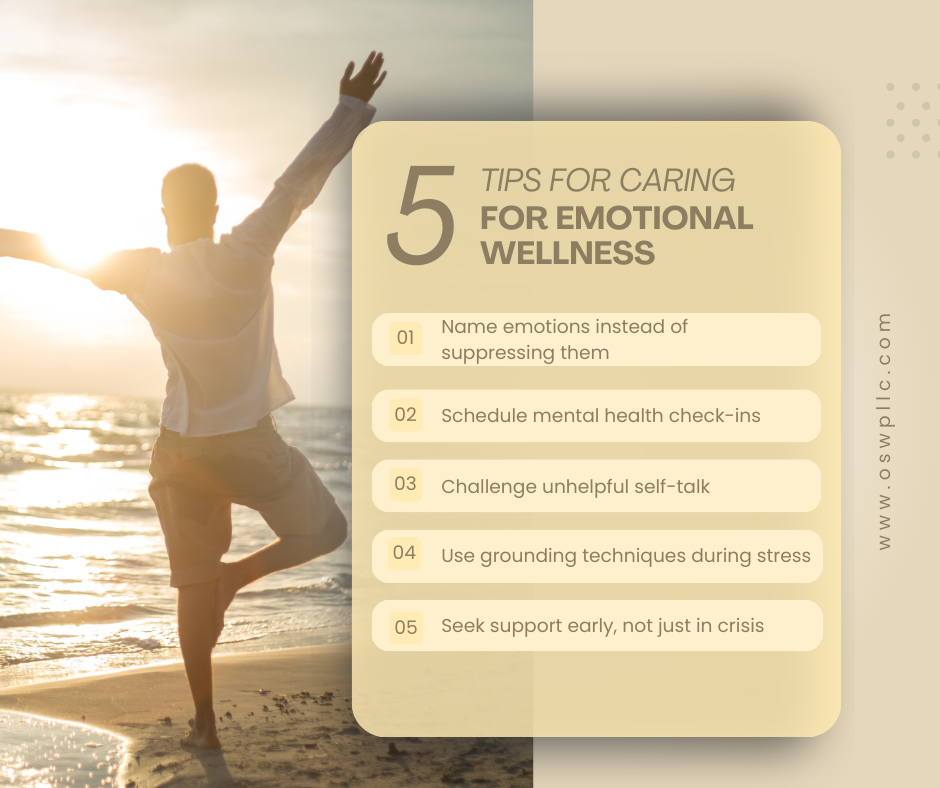
Mental and emotional wellness shapes how we process stress, regulate emotions, and navigate relationships. It’s not just about managing crises—it’s about building resilience, awareness, and self-compassion over time.
Tips & Tricks:
Name emotions instead of suppressing them,
Schedule mental health check-ins.
Challenge unhelpful self-talk.
Use grounding techniques during stress.
Seek support early, not just in crisis.
-
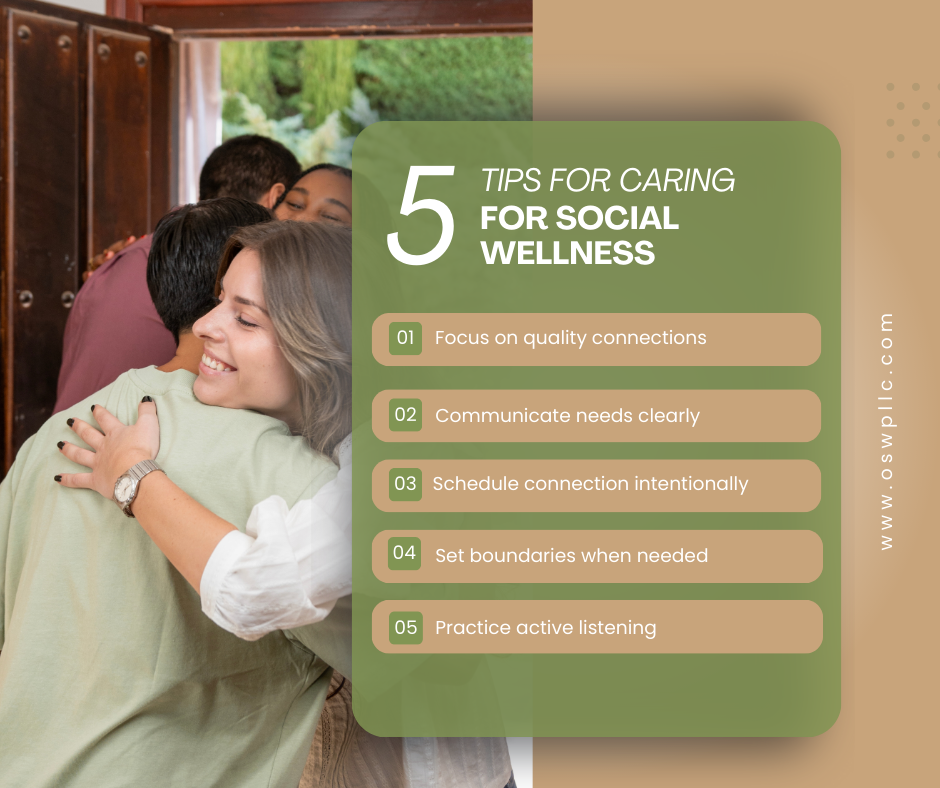
Social wellness is about meaningful connection, healthy boundaries, and belonging. Supportive relationships protect mental health, while unhealthy ones can drain emotional energy.
Tips & Tricks:
Focus on quality connections.
Communicate needs clearly.
Schedule connection intentionally. .
Set boundaries when needed.
Practice active listening.
-
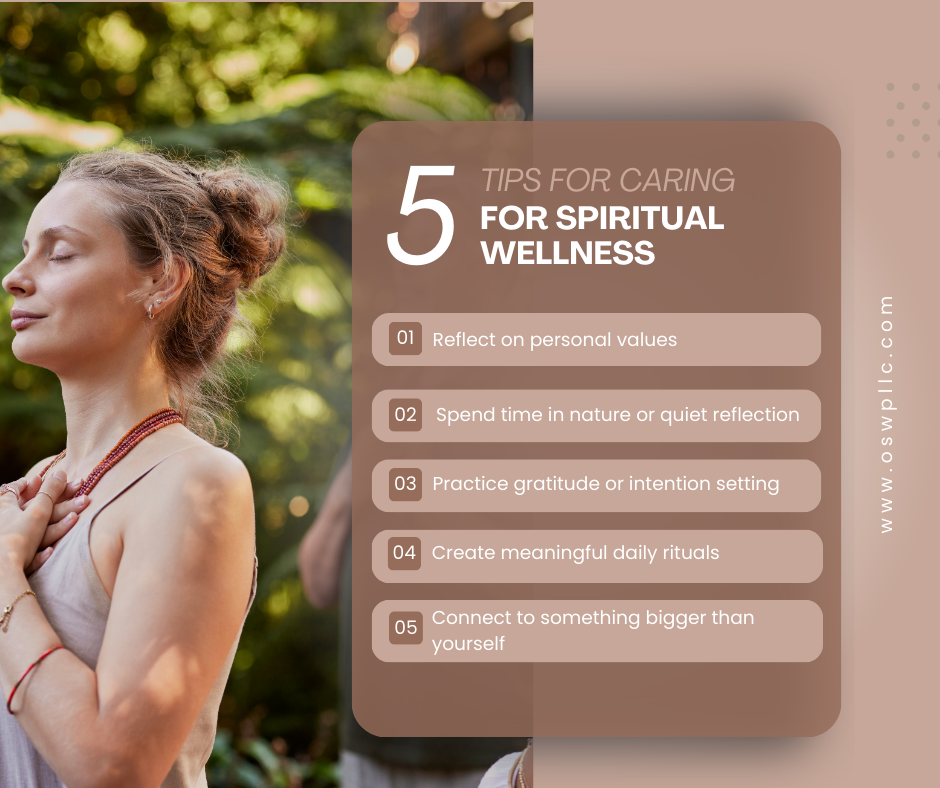
Spiritual wellness is about meaning, purpose, and connection—whether through faith, values, nature, or inner reflection. This pillar helps anchor us during uncertainty and provides a deeper sense of peace and alignment.
Tips & Tricks:
Reflect on personal values.
Spend time in nature or quiet reflection.
Practice gratitude or intention setting.
Create meaningful daily rituals.
Connect to something bigger than yourself.
-
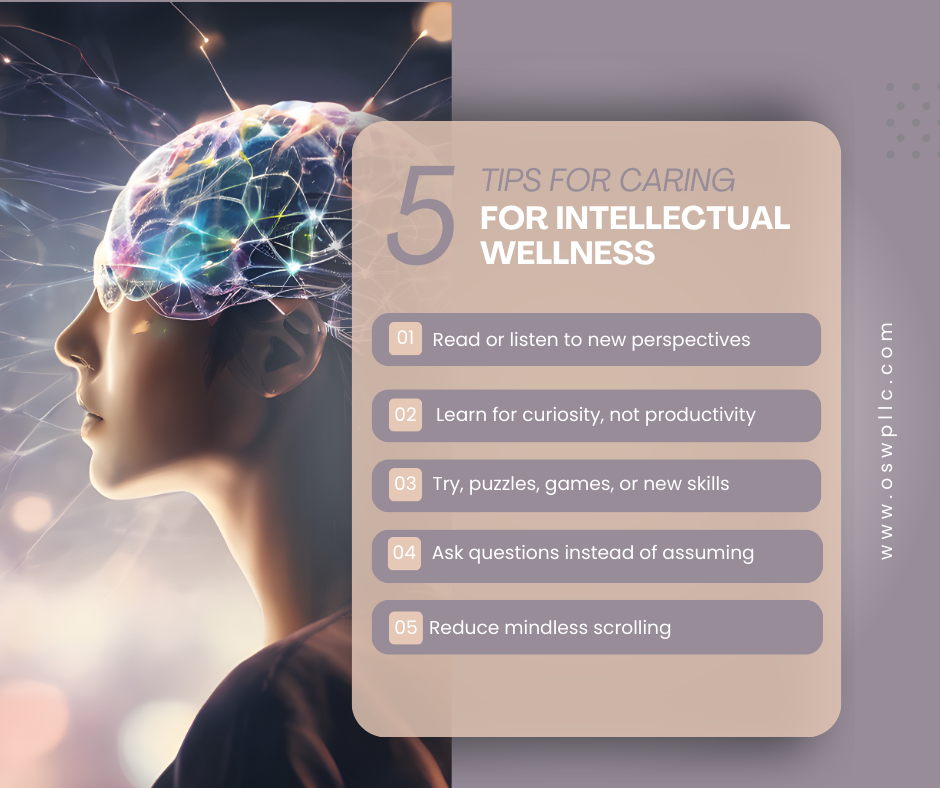
Intellectual wellness supports curiosity, creativity, and cognitive flexibility. Lifelong learning strengthens brain health and emotional resilience. Growth doesn’t stop—it evolves.
Tips & Tricks:
Read or listen to new perspectives.
Learn for curiosity, not productivity.
Try puzzles, games, or new skills.
Ask questions instead of assuming.
Reduce mindless scrolling.
-
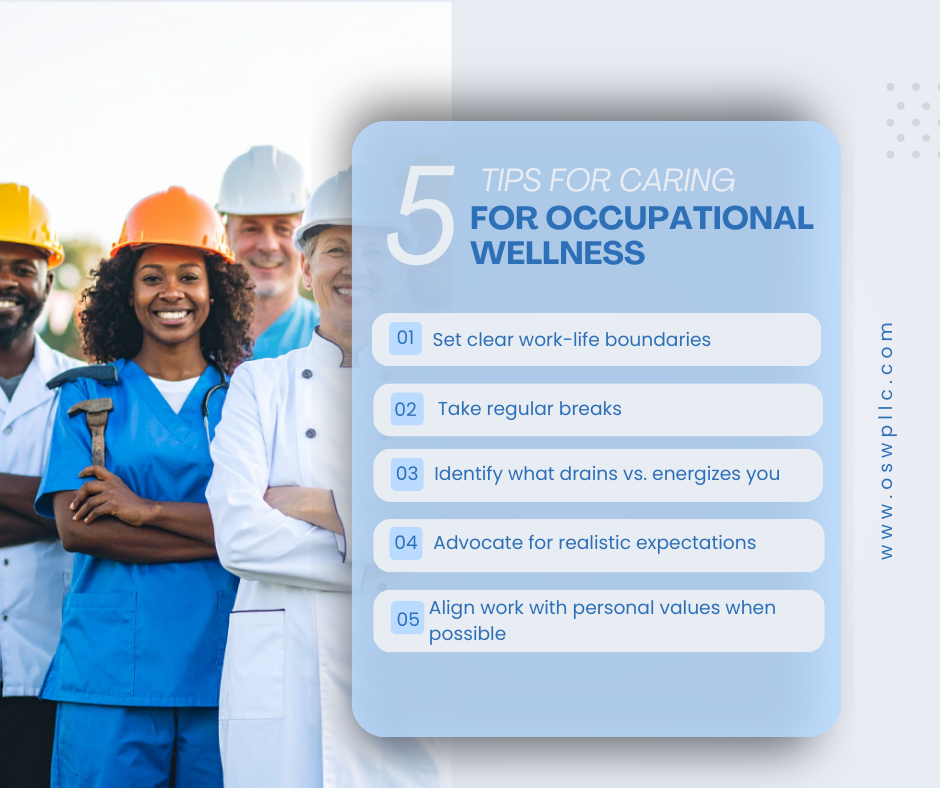
Occupational wellness focuses on balance, purpose, and satisfaction in work and daily roles. Chronic stress or burnout can spill into every area of life. Sustainable wellness includes how we spend our time and energy.
Tips & Tricks:
Set clear work-life boundaries.
take regular breaks
Identify what drains versus energizes you.
Advocate for realistic expectations.
Align work with values when possible.
-
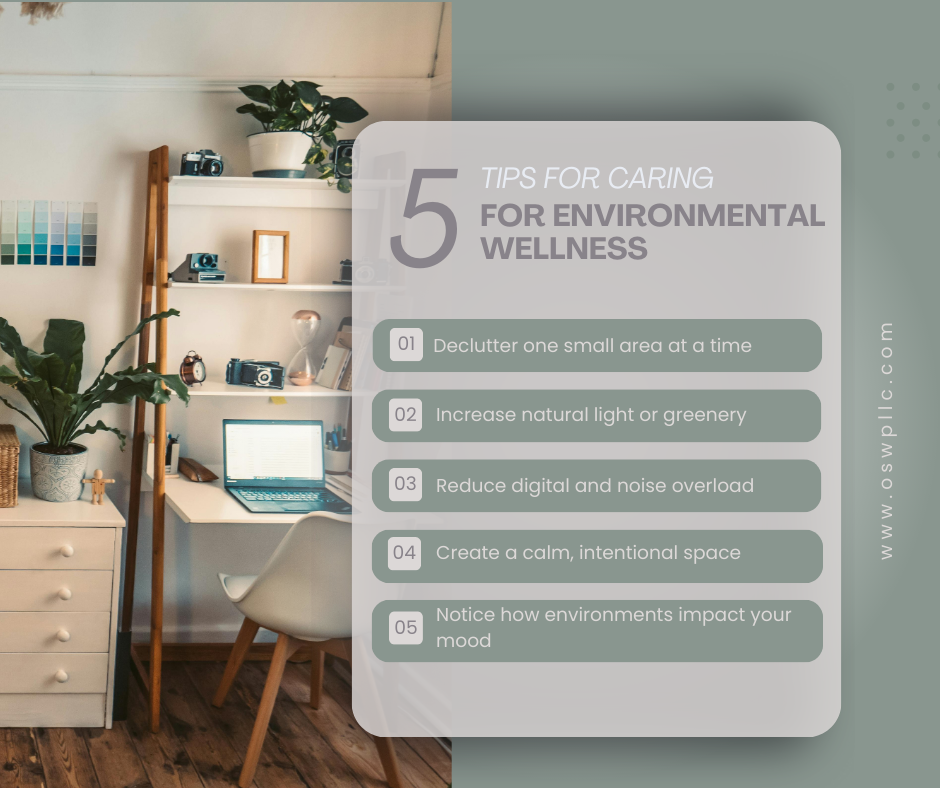
Our surroundings shape our stress levels, focus, and emotional regulation. A supportive environment promotes calm, while chaotic spaces can increase overwhelm. Whole-person care includes creating spaces that support healing.
Tips & Tricks:
Declutter one small area at a time.
Increase natural light or greenery.
Redyce digital and noise overload.
Create a calm, intentional space.
Notice how environments impact your mood.
Viewing health through a holistic lens encourages greater self-awareness and compassion. Rather than focusing on perfection or quick fixes, it emphasizes sustainable habits, meaningful connections, purposeful work, and supportive environments. By recognizing how these pillars interact, individuals can better understand their own needs and make intentional choices that support overall well-being.
Holistic health is not about doing everything at once—it’s about creating harmony across the many aspects of life that contribute to feeling well, grounded, and whole.